Quick answer: Macro photography tips: true macro vs close-up, lenses and extension tubes, depth of field, focus stacking, lighting with diffused flash and subjects to try.
Macro photography reveals worlds we normally overlook: insect eyes, water droplets, flower textures and tiny details. It's technically demanding and endlessly rewarding.
What counts as macro?
True macro means a magnification of 1:1 or greater: the subject appears life-size (or larger) on the sensor. "Close-up" photography is anything close but below 1:1.
Equipment options
| Option | Pros | Cons |
| Dedicated macro lens (e.g. 90–105mm) | Sharp, true 1:1, good working distance | Cost |
| Extension tubes | Affordable, no glass | Lose infinity focus, less light |
| Close-up filters | Cheap, easy | Lower quality |
| Reversed lens | Very cheap, high magnification | Fiddly, manual |
Longer macro lenses (around 100mm) give more working distance, which is useful for insects.
Depth of field is tiny
At macro distances, depth of field can be fractions of a millimetre, even at f/8.
- Use f/8–f/16 for more depth (watch for diffraction softness at very small apertures)
- Keep the sensor parallel to the subject's main plane
- Focus by moving the camera slightly rather than turning the focus ring
Focus stacking
Take several frames at slightly different focus points and blend them in software for front-to-back sharpness. It works best for still subjects such as products, flowers and jewellery.
Lighting
Small apertures need lots of light. Options:
- Diffused flash: a flash with a large diffuser gives soft, even light and freezes movement
- Ring lights: even, shadowless light
- Reflectors and LEDs for still subjects
Stability
Use a tripod for still subjects. For insects, handheld with flash is often more practical.
Subjects to try
- Flowers and leaves
- Water droplets and dew
- Textures: fabric, wood, rust
- Jewellery and watches
- Insects in early morning, when they're less active
Macro for business
Macro skills are valuable in jewellery, cosmetics, watch and product photography, where fine detail sells.
Learn macro photography
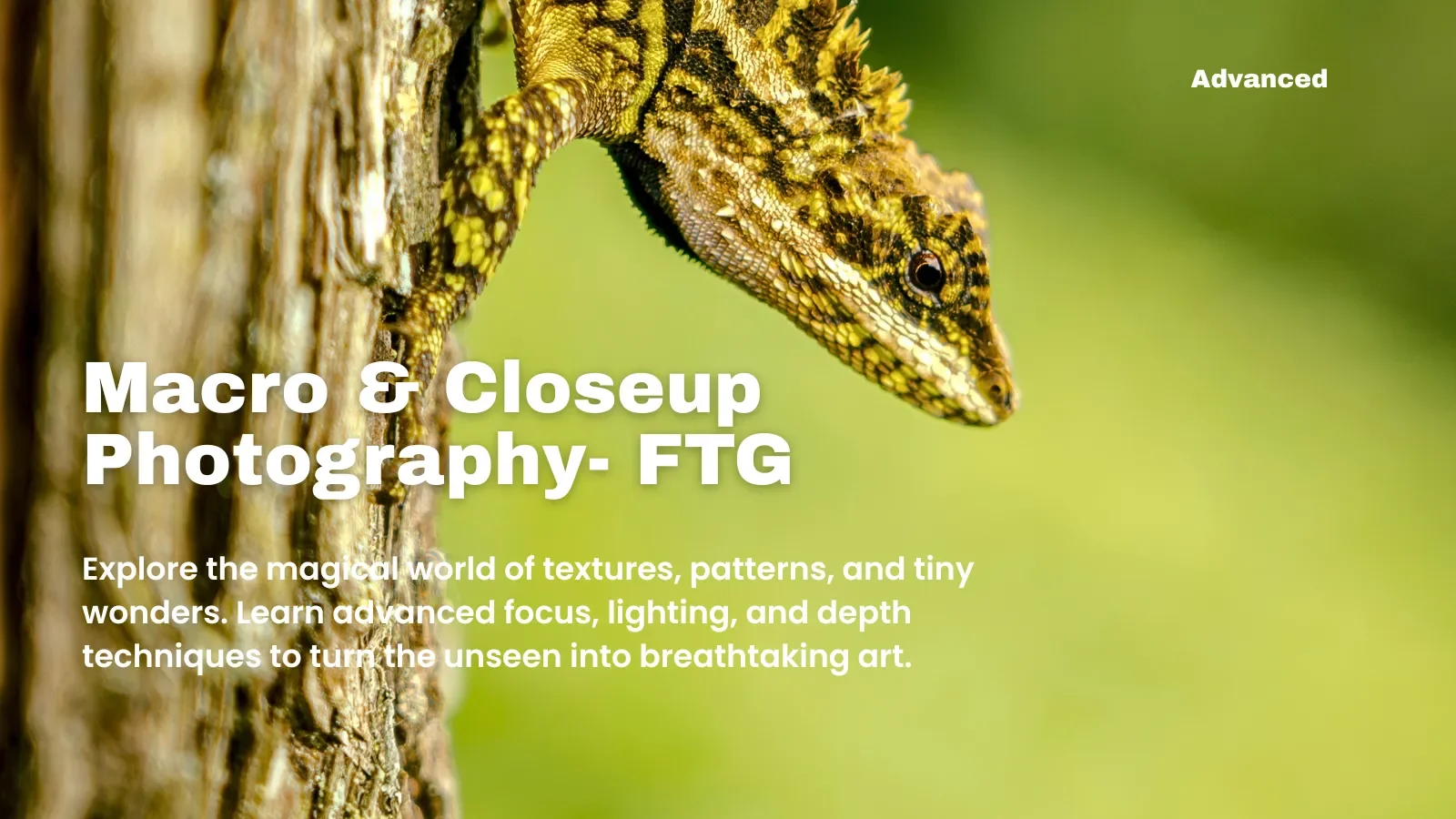
RAP Education's macro and close-up photography masterclass covers precision lighting, focusing, focus stacking and creative composition for nature and product work.
Frequently asked questions
What is macro photography?
Photographing small subjects at 1:1 magnification or greater, so they appear life-size or larger on the sensor.
Do I need a macro lens for macro photography?
A dedicated macro lens is best, but extension tubes, close-up filters or reversed lenses are cheaper alternatives.
What aperture is best for macro photography?
Around f/8–f/16 for more depth of field, while watching for diffraction at very small apertures.
What is focus stacking?
Combining several images focused at different distances to make the whole subject sharp.
How do I light macro photos?
Diffused flash, ring lights, LEDs and reflectors provide the light small apertures need.
What is the best focal length for insect macro photography?
Around 90–105mm macro lenses give comfortable working distance for insects.
Is macro photography useful professionally?
Yes, especially for jewellery, cosmetics and detailed product photography.
Does RAP Education offer a macro photography course?
Yes, the macro and close-up photography masterclass.
- #macro lens
- #close up photography
- #focus stacking
- #insect photography
Photography courses near you: